
Many people crave the rush of adrenaline that results from being scared and those who loathe all things scary can’t even begin to comprehend how this could be possible. To get into the true spirit of Halloween this October, it’s important to examine the psychological explanation as to why fear may be enjoyable, as well as recognize the recurring popular demand of the horror genre in pop culture — in other words, the thrill of horror.

Fear is Fun?
Though seemingly far-fetched, a wide range of individuals delight in all aspects of fear: the pounding heart, the spine-crawling chills, the tummy-turning butterflies. Christopher Dwyer from Psychology Today explains that our reaction to something scary is affected by the setting in which we are in, stating that, “…if we are in a setting where we get a “safe” fright (e.g. watching a horror film, visiting a haunted house, or playing a scary video game) our brains will quickly evaluate the situation and tell us that we’re free from risk.” We as humans have the innate ability of a “fight-or-flight” response to things that our bodies might perceive as threatening. But, encountering such a threat within familiar surroundings, such as from the comfort of our own homes beside our own family or friends, mollifies our apprehension. This then explains why one would be unperturbed by all fear factors. When we feel in control of a situation, we tend to feel less anxiety. The ultimate gratification comes from the self-satisfaction we receive from facing our fears.
Halloween is a Treat

While many associate Halloween with the idea of witches and evil ritualistic practices, a shift in perspective can make modern day Halloween hold much deeper meaning. Today we may use Halloween as a way to embrace all things scary and, for one night, tackle our fears head on. Megan McClintock of Medium, speaking on the lasting impact of this celebration, explains that “It’s about how we deal with death, and the psychology of how we process fear.” She writes, “When…we perceive ourselves as being in a safe space, we can then quickly shift the way we experience that high arousal state, going from one of fear to one of enjoyment or excitement.” The way we experience fear can be altered and can manifest into elation when we are in a controlled, safe environment.
Horror in Pop Culture

Fear is an idea that is introduced to us from a young age. If you consider the game of “peek-a-boo”, you know that this is a light-hearted scheme with the intent to make an infant giggle from getting a quick spook. Even before we have the mental capacity to verbally communicate, we have the innate ability to respond to a shock or startle with excitement and laughter. Almost every child has been exposed to and become accustomed to fear with classic campfire scary stories. Children love stories filled with mystery and thrilling adventures, stories that they can get lost in as they explore the realm of imagination. This is why the Goosebumps book series is widely popular among the younger age group. These stories allow even adolescents to find entertainment in feeling a fright.

Horror in Literature
The popularity of the horror genre in literature can be credited by the works of notable authors such as Edgar Allan Poe and Stephen King. In many of his stories, Poe’s focus is to create a heightened level of suspense and sense of realism for his readers. Stephen King, who esteems Poe as an inspiration behind his work, emulates this same tactic. Because they are able to make their audience feel more emotionally invested in a character, the reader’s own fear is intensified. These stories invoke a type of fear that is accepted. Many long for the feeling of becoming enraptured by psychologically thrilling tales.

Edgar Allan Poe 
Horror in Music
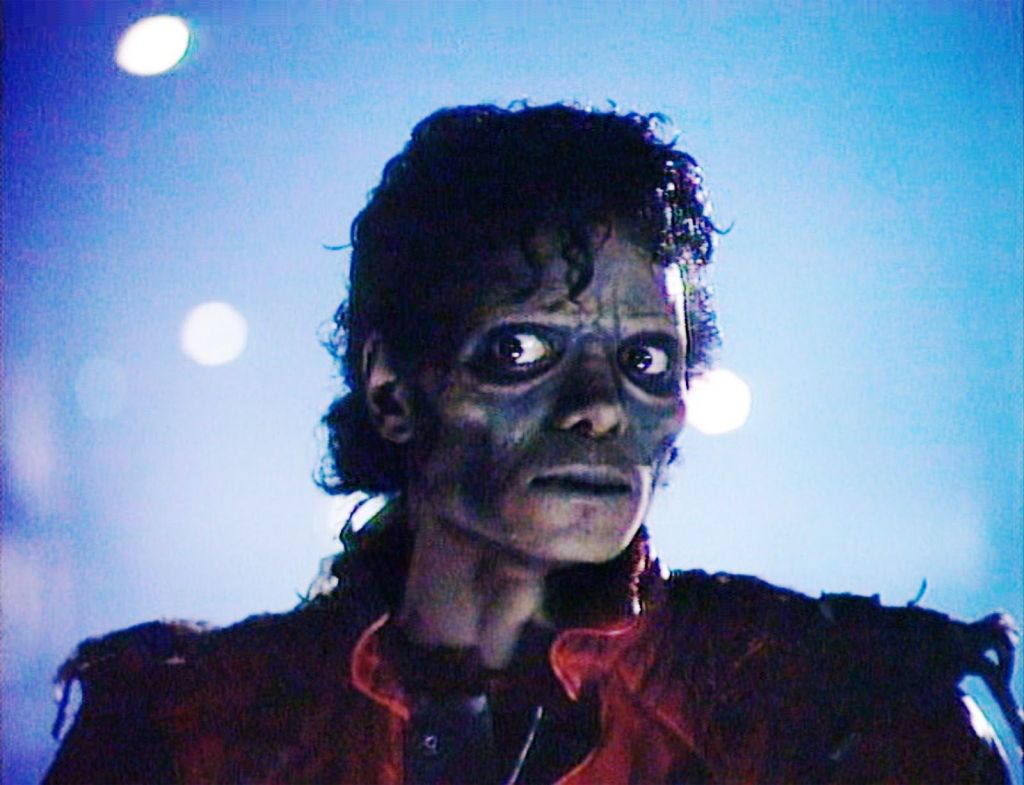
Horror even creeped its way into the music industry. Donned the ‘King of Pop’, Michael Jackson became the catalyst for a newfound appreciation of horror with his frighteningly entrancing video for his hit song “Thriller”, which became a timeless, classic Halloween-time tune. Josh Jones of Open Culture weighs in on what it is that has made “Thriller” so popular, writing that it is due to “the combination of good clean fun and perfectly-pitched camp horror.” Michael Jackson claimed that growing up he actually hated horror, yet went on to prove that horror can be fun-spirited.
Horror: A True Escapism
There is something hauntingly beautiful about fear. Whether brought on by a scary movie or a wicked haunted house, horror is universally prominent. Jerry Davich from Chicago Tribune examines that attractions such as annual haunted houses are of such high demand because, “If it’s a top-notch haunted house, we’re not thinking of anything else while we’re inside…Nothing but the fear that’s oozing through our minds. This is the true beauty of haunted houses…” He describes “this type of controlled fear as sheer escapism”, because this exhilaration allows us to escape the reality of our personal lives. While not everyone can agree to the notion that there is fun in fear, many have had the pleasure of experiencing a special euphoric escapism: the thrill of horror.
~~~

Happy Halloween!











 》 Faith It ‘til You Make It 《