In pursuing a career in writing, I’m always looking for opportunities that challenge my limits and open my site to a whole new world of readers. A couple of weeks ago, I got a great opportunity that just might do that.
Hoping to score an interview, months ago I boldly reached out to Chelsie Hill, who at 17 became disabled in a car accident and went on to be the founder of a dance team for women in wheelchairs, the Rollettes. I received a message only a day later from Chelsie’s and the Rollettes’ Chief Operating Officer, Bria. She informed me that while Chelsie was unavailable, she could give me the names of a couple girls that would be a good fit. I owe big thanks to her for giving me the chance of a lifetime. Soon after I was able to separately connect, via video chat, with two ladies from Chelsie’s private mentorship program Boundless Babes Society.

Shannon, who is 22 years old, is from the San Francisco Bay Area, and like me has Spina Bifida. Renee, who is 21 years old, is from Ohio, and has Spastic Quadraplegic Cerebal Palsy. Interestingly, she informed me that she is a triplet alongside two able-bodied brothers. Also, she has a birthday a day after (and a year before) mine.
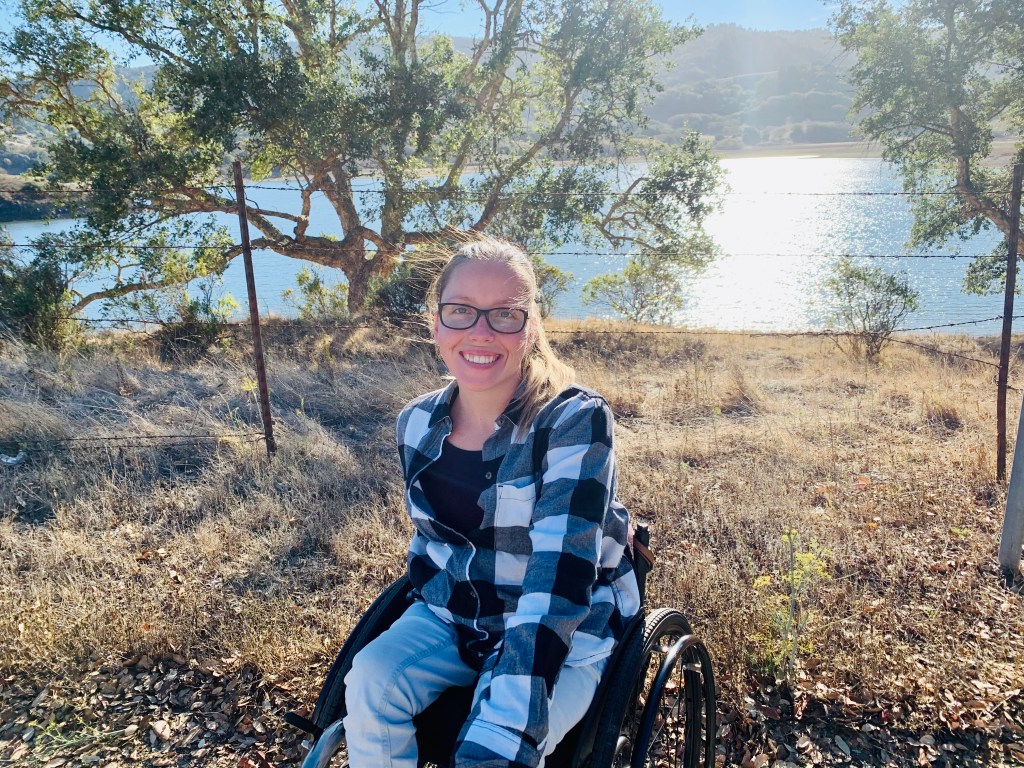
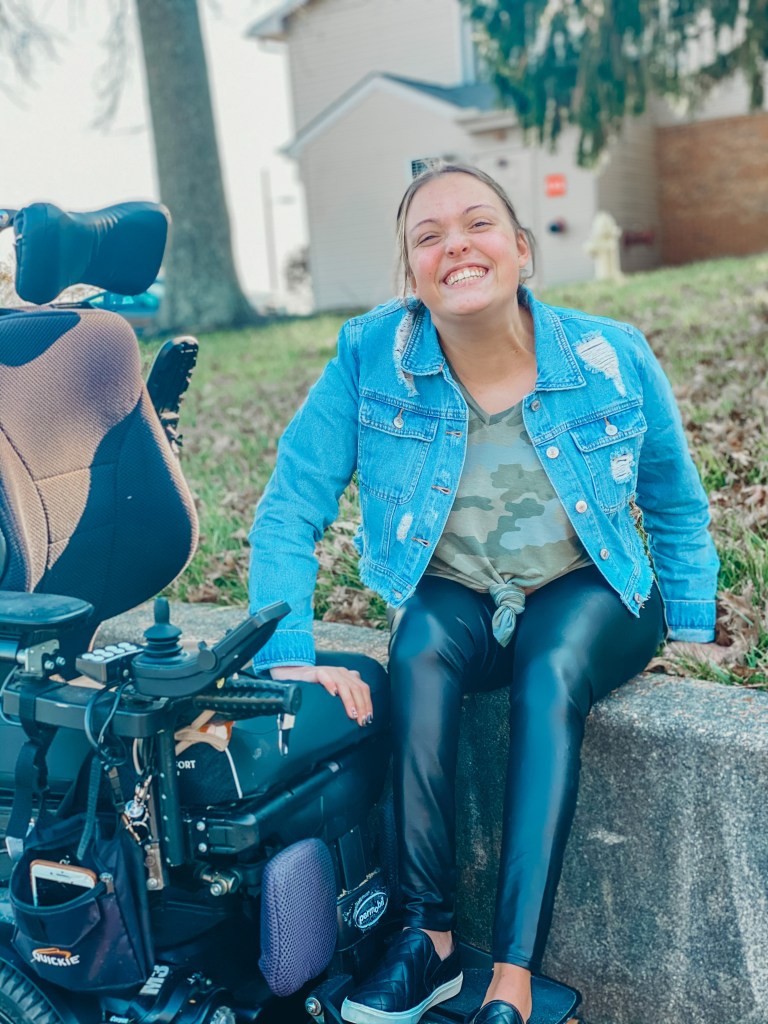
I’ve been keeping this project a secret from many of you, so today on Global Accessibility Day, I am pleased to finally share the interview I conducted with two of my awesome new friends, Shannon Dugdale and Renee Dollenmayer!
What are some of your hobbies or interests?
Shannon: “For my whole life I have been a swimmer so I love anything that has to do with being around a pool whether it’s being at a swim meet, coaching or actually being the one in the pool” . She also tells me that she is a very social person, so she loves being with her family and friends.
Renee: “I’m really into my faith, I lead a ministry called Even If Ministries. [Also] Greek life as I am in Kappa Delta Sorority…I love the leadership it provides and the confidence it has given me to be a better leader”. She says that besides anything faith related, she loves empowering other women, whether they’re disabled or not.
What do you think is the biggest misconception about people with disabilities/wheelchair users?
Shannon: “People don’t think that we can do sports or go out and do things on our own. To these people, she says, “back up, open your eyes, and watch me do it because I can”.
Renee: “Being a power chair wheelchair user, people automatically assume that [we] do less for [ourselves], [Many assume we] aren’t as independent… which is so far from the truth”. She also notes how there are people that believe “people with disabilities have a lesser of a life, which is so silly”.
Society oftentimes places disabled individuals in a demanding position of being an “inspiration”, what do you make of this?
Shannon: “If you think that I’m an inspiration…It’s not just beause of my disability, I feel that it’s because of what I am doing with my life to be seen as…inspirational”. She says just like there are inspirational non-disabled individuals, “I don’t put myself on a different playing field than them…Michael Phelps achieved this?…I’m going to achieve it too”.
Renee: “lf I’m an inspiration for starting a ministry, then yes that term is fine. But if I’m just taking a shower…I hate it. That’s not being an inspiration that’s being a human”.
What is “Boundless Babes Society”?
Shannon: “Boundless Babes Society is a mentorship program run by Chelsie Hill. Each month there is a new topic that we focus on and we meet [via] Zoom [to discuss] what we can do using that topic to help pursue our goals.” She states, “…We use each other [from the group] to “help each other stay accountable…”, adding that, “It’s a really good way to make friends with other people that have the same goals or disability as you.”
Renee: Explaining that it is a program in three stages, she clarifies, “I’m in Stage 3…” She describes it as a “mentorship program with the Rollettes [in which] you are able to set goals and have someone on the team mentoring you.” She shares “…[it] has been such a gift for me…I would not be able to reach my goals like I have been able to without the Boundless Babes Society.”
What does the program’s slogan “Be Boundless” mean to you?
Shannon: “Don’t let anything get in your way. Just keep pushing [and] keep on going no matter what. Don’t stop, try to keep yourself motivated.”
Renee: “Living in freedom and not letting a disabled body be a statement of empowerment, but to live boundlessly whether that looks like physical independence or…mental and emotional wellbeing. Living boundlessly in that and being proud to be who you are.”
In the age of social media, how do you think digital accessibility and social platforms have helped the disabled community?
Shannon: “Some disabled people might not have as easily access to people in their community outside of their house…they can use social media to connect with other people…”
Renee: “In a way, this pandemic has been such a gift, it’s shown the able-bodied community that Zoom is a completely accessible and wonderful place to hold meetings. We don’t always need to go in person…it’s shown the rest of the world accommodations that can be done in our society that really are a gift… accessibility [like] curbside pickup…I hope those accessibility features stay for good because I think they’re so valuable.”
Why do you think representation of disability is so important?
Shannon: “…It shows other [able-bodied] people that we’re just like them. We can do everything, we just might do it a little differently or [in some cases] we might do it slower, and that’s okay…”
Renee: “…disability is the most common [and] diverse people group…so we [need to] have that represented.”
How do you feel about portrayals of disabled characters in films?
Shannon: “I think it’s not shown very often…it doesn’t bug me necessarily, but we aren’t shown. It might be cool to have it shown [more]…”
Renee: “It drives me nuts when the person playing the character is really not disabled, which happens so many times…How do you expect them to be able to empathize?” She gives the example of when an actor/actress is disabled but for example, plays a non-verbal character when in real life they are verbal. She believes these roles should be given to truly non-verbal people “so that they can play [the] character to the best and fullness of what it’s created to be.” She acknowledges that “…we’ve definitely made progress.”
Growing up were you always confident in owning your disability or was it something you felt you had to learn to embrace?
Shannon: “Growing up I never looked at myself as disabled, I was just another person in the room. The way I was brought up, everyone embraced me and I wasn’t excluded because of the chair…I never really thought about being disabled, I just thought [of how] I have challenges…[it’s not that] I didn’t want to embrace it, I just never thought about it.” She tells me being disabled has always felt like something unchangeable about her that she’s dealt with her whole life. She funnily remarks, just like how her sister lives her life being “not good” at skiing, she lives hers pushing a chair.
Renee: “I grew up with my disability so there was always a little sense of confidence, but also we all as humans go through highs and lows of our identity, so there definitely was a time where I think I wasn’t the biggest fan of my disability and had trouble really owning my identity…when I put my identity in Christ, that’s when it really changed for me personally.”
Oftentimes people can’t see us for who we are beyond our disability, how do you hope people see you as an individual?
Shannon: “Personally I hope they see me as the badass swimmer that can go and break records and not the girl in the chair who attempted to swim and she ‘had’ to go swim with the Paralympics not the Olympics…I’m the girl who went, broke some California records…and represented the United States in a meet in Canada…I’m not ‘the girl in a chair’”
Renee: “…as a strong, independent, hard worker…I can do just the same things as everybody else…I’m a powerhouse and there’s so many more layers [to me] than the [disability].”
Who in your life empowers/inspires you?
Shannon: “My family empowers me and my swim team really inspires me. They’ve been so supportive all these years with all of my goals”. She shares a story with me of the time her high school swim coach flew down with some teammates and family to Southern California for her first Paralympic swim meet that would allow her to qualify for an international meet in Canada. She says “that motivation really helped me in my races.” She was able to advance to the meet in Canada and bring along another one of her coaches which she recalls as “incredible”.
Renee: “Chelsie Hill and the Rollettes [have helped me with] achieving my goals and following my heart…anyone in the disabled community who is also a Christian, because that is what I practice…Joni Eareckson Tada. She tells me she is currently doing an internship through Joni & Friends Ministry. She describes Tada as “such a woman of God, [who] puts him first in everything she does and in her ministry…she just inspires me and empowers me to continue to grow in my faith.”
I’ve always wanted to have a discussion with other individuals who, like me, are disabled. Getting to do so with two of Chelsie Hill’s Boundless Babes was the most amazing experience. I hope this article provides different perspectives from people with disabilities, while spreading awareness to the fact that we’re human just like the rest of society. This is the biggest opportunity that I have gotten so far in my writing career and I will continue to push myself to reach more. I want to give the girls a big thanks for allowing me to conduct my first real interview and for sharing with me their personal experiences of living boundlessly.

~~~
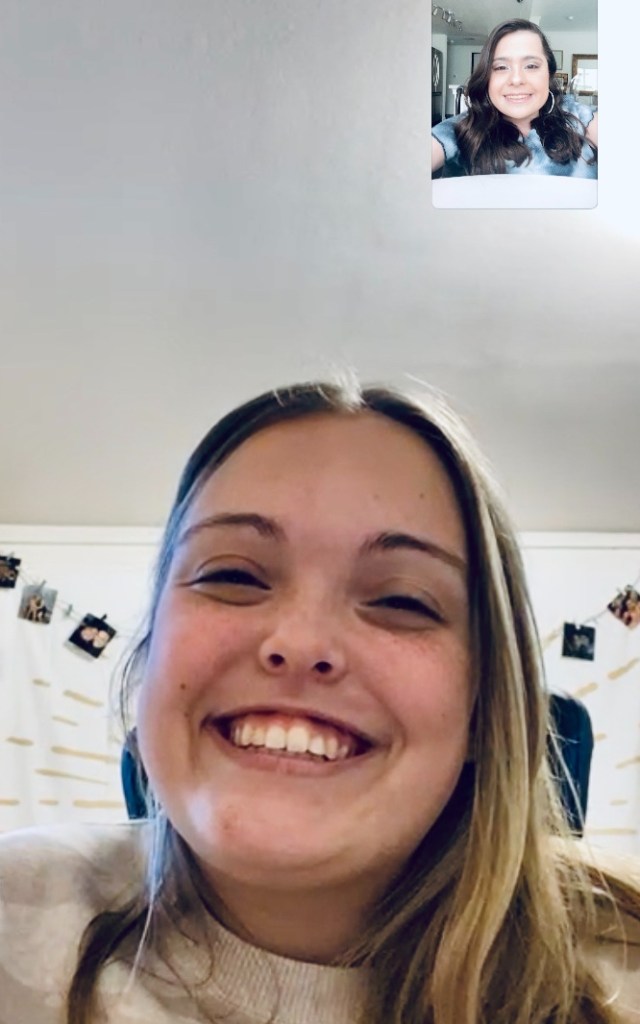
Thank you to these wonderful ladies, Shannon and Renee, for allowing me to conducted my first interview and write this article for them! Check them both out on Instagram @reneedollenmayer and @shannondugdale!