It’s not often that I feel personally affected by a social media post, but when I came across Tammy Le’s heartbreaking viral video, I was stunned. It was the second video I had seen, within weeks of each other, that showed a young woman in distress after an airline company had mishandled and damaged her wheelchair. Lately this has become a recurring issue and I wanted to get to the bottom of it. It was important to me that I help in getting this woman’s story out. I was lucky enough to contact the woman shown in the video and get to know her, as well as interview her about her experience on that dreadful day.
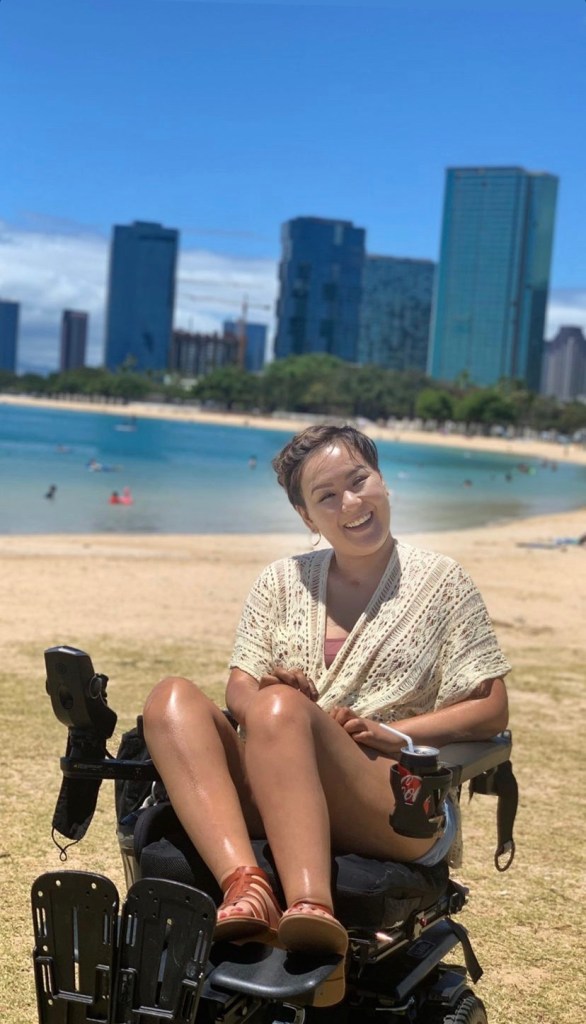
Tammy is a C4/C5 quadriplegic who was injured in a car accident at age 17. She gave me insight into what it’s like to have to adjust to living with a disability. She shared “It was almost…culture shock. Disability as well as spinal cord injury was a community, as well as an injury and a part of my anatomy that I was completely unaware of. I was extremely insecure and unwilling to accept my new body and ‘reality’. But as years went on, working hard and putting work back into myself helped me heal and find acceptance and a newfound sense of confidence.”
Now, it is her strong conviction that we keep disability in conversation and advocate for people with disabilities. She expressed to me “It’s important to raise awareness by amplifying the voices of the disabled community because we live in a world filled with diverse human beings with different bodies and level of functionality. Everyone will meet disability at some point in their life, so it’s important to build an inclusive society, community, and world…[So that] everyone can enjoy life.”
When I asked her about her hobbies and interests, she shared with me “I enjoy being creative. My favorite outlets to be creative is through videography, photography, and designing new logos and apparel for my clothing line called ‘RESILIENT’,” and resilient, she is.
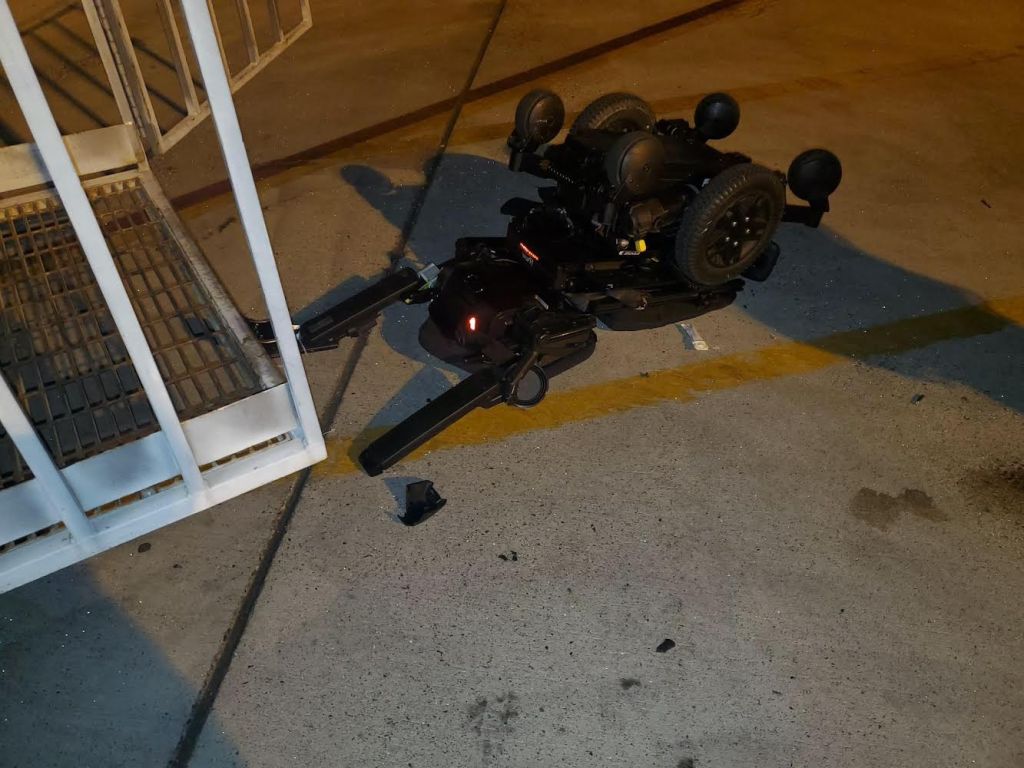

In late June, while traveling home from a vacation, Tammy had the unimaginable happen to her. Shortly after being seated, not only one, but two of her personal wheelchairs (a power chair and a manual wheelchair) were damaged when they were mishandled on a flight with Southwest Airlines. Even after specific instructions to handle the chairs with care, it was alleged that the wheelchair lift had malfunctioned and the chairs slid off it from a 10 ft. height. In her own experience, this incident could have been avoided if the emergency brakes had been locked as soon as the chairs were placed on the lift. She told me “my chairs were damaged…late Friday night, after a five hour delay.” Although a wheel had bent on her manual chair causing it not to roll smoothly, she had to rely on it until the airlines could provide her a loaner chair. She shared “I almost developed a pressure sore because as a higher level quad, I’m not able to weight shift myself in my manual chair…When they finally brought me my my first loaner my feet dangled…It was not the correct measurements for my weight and height.” In expressing her feelings about this experience, she stated she was overcome with immediate “disbelief, then stress and anxiety…I didn’t know how long it was gonna take and I had to think about how I was going to get by in a manual [chair] for the unforeseeable future…This whole ordeal stripped me of my independence…”


As a person with a disability, we are constantly met with discriminatory barriers that hinder our ability to live our life as “normal” as possible. When public places do not follow through with standard regulations needed to support people with disabilities, this only adds to our troubles. Prior to this incident, Tammy felt she had meticulously researched the right options for her to be able to travel alone. From the start, the airline company told her “they weren’t allowed to touch me and help me weight shift during my flight because I am a liability.” When you live with paralysis, shifting your weight is crucial when sitting in one place for extended amounts of time in order to prevent pressure sores or even worse, blood clots. Southwest also told her they would not be able to help her empty her catheters when they get full. Despite this, Tammy had put faith into this company and trusted them to handle her and her needed assistive equipment with care, so she could simply enjoy and return home conflict-free from a fun vacation.
Once home, she was able to get in contact and file a claim for both of her damaged chairs with a repair company, Global Repair Group. This is Southwest Airlines’ “third-party company…[that] helps look for vendors for loaner rentals that Southwest compensates for. They also send out technicians to get measurements for your chair replacements.” She informed me, “I pushed for my own vendor that I worked with for years because I didn’t trust a stranger to know much about spinal cord injury and my level of injury, and I’m glad I did.” Despite her valid frustration, she wants to highlight this repair company that worked with her during this difficult time. She believes “…Global Repairs is a really good third-party company. They are on top of reaching out to you and coordinating loaners/vendors. I think the issue is the airlines and the vendors that are greedy. The vendors charge up to $1200 a day for an extremely basic chair that does not fit you.”
Critics of Tammy’s dejection over this situation must understand that our wheelchairs are built to fit our specific bodies’ needs. To mishandle and break our wheelchair is like callously breaking someone’s legs. To be without our own chair is uncomfortable and devastating. It’s apparent that time and time again, airlines have gotten by with a hasty apology. No amount of compensation can mitigate the permanent ramifications of these unfortunate accidents caused by people who are misinformed and indifferent. In regards to her personal chair, Tammy feels “Ergonomically and functionally it provides me…independence and comfortability. I’m able to lean forward to stretch my back, recline in order to circulate blood and relieve pressure off my bottom, I’m able to elevate, I’m able to dress in my chair. I am more safe and secure due to the specific measurements and contouring.”
When asked what she wishes would be done about this issue, Tammy stated “I wish the world could slow down and empathize. Empathize and understand that every human being is worthy of being able to experience life. [The] disabled community should not be excluded and looked over as some pity party just because we need/want to feel included and heard. Something as simple as a ramp or to stay in our power chair to fly, or just simply asking others to slow down when taking care of our mobility aids — essentially our arms and our legs – our livelihood.” It’s disappointing that even 31 years after the signing of ADA, or the Americans with Disabilities Act, that some public places and means of travel still don’t provide quality assistance or follow proper protocol when handling mobility aids. It is paramount that in the near future, we see change in this seemingly unrelenting “flight risk” — the way airlines handle assistive equipment belonging to people with disabilities. It is time we care.
~~~
Shoutout to Tammy for giving me the opportunity to share her story! Show your support by following her on Instagram @/resilient.comm or check out her YouTube channel Resilient. quad! Also, click the link below to shop her apparel: https://resilientquad.bigcartel.com
 》 Faith It ‘til You Make It 《